


How to Light Every Room in Your Home: A Room-by-Room Guide for 2026
How to Light Every Room in Your Home
A Room-by-Room Guide for Better Comfort, Better Function, and Better Style in 2026
Great homes are not just decorated well. They are lit well. The right lighting changes how a room looks, how it feels, and even how well it works for everyday life. In 2026, designers continue to emphasize layered lighting: combining ambient, task, and accent light instead of depending on one harsh ceiling fixture.
If your home feels too dark in some corners, too bright in others, or just somehow unfinished, your lighting plan is probably the missing piece. This guide breaks down exactly how to light each room in your home, what fixtures work best, and where lamps make the biggest difference.
What's covered:
- The 3 lighting layers every room needs
- How to light the living room
- How to light the bedroom
- How to light the kitchen and dining room
- How to light the bathroom, home office, and entryway
- The best lamp types for each space
The 3 lighting layers every room needs
Before choosing fixtures, start with the basic rule used by interior designers: every room should include ambient lighting for overall brightness, task lighting for focused activities, and accent lighting for depth and mood. Rooms feel flat when they rely on only one layer, especially overhead-only lighting.
| Lighting Type | What It Does | Examples |
|---|---|---|
| Ambient | Provides overall room illumination | Ceiling lights, chandeliers, flush mounts |
| Task | Lights a specific activity area | Desk lamps, bedside lamps, pendant lights, under-cabinet LEDs |
| Accent | Adds atmosphere and highlights decor | Table lamps, wall sconces, LED strips, picture lights |
Living room lighting
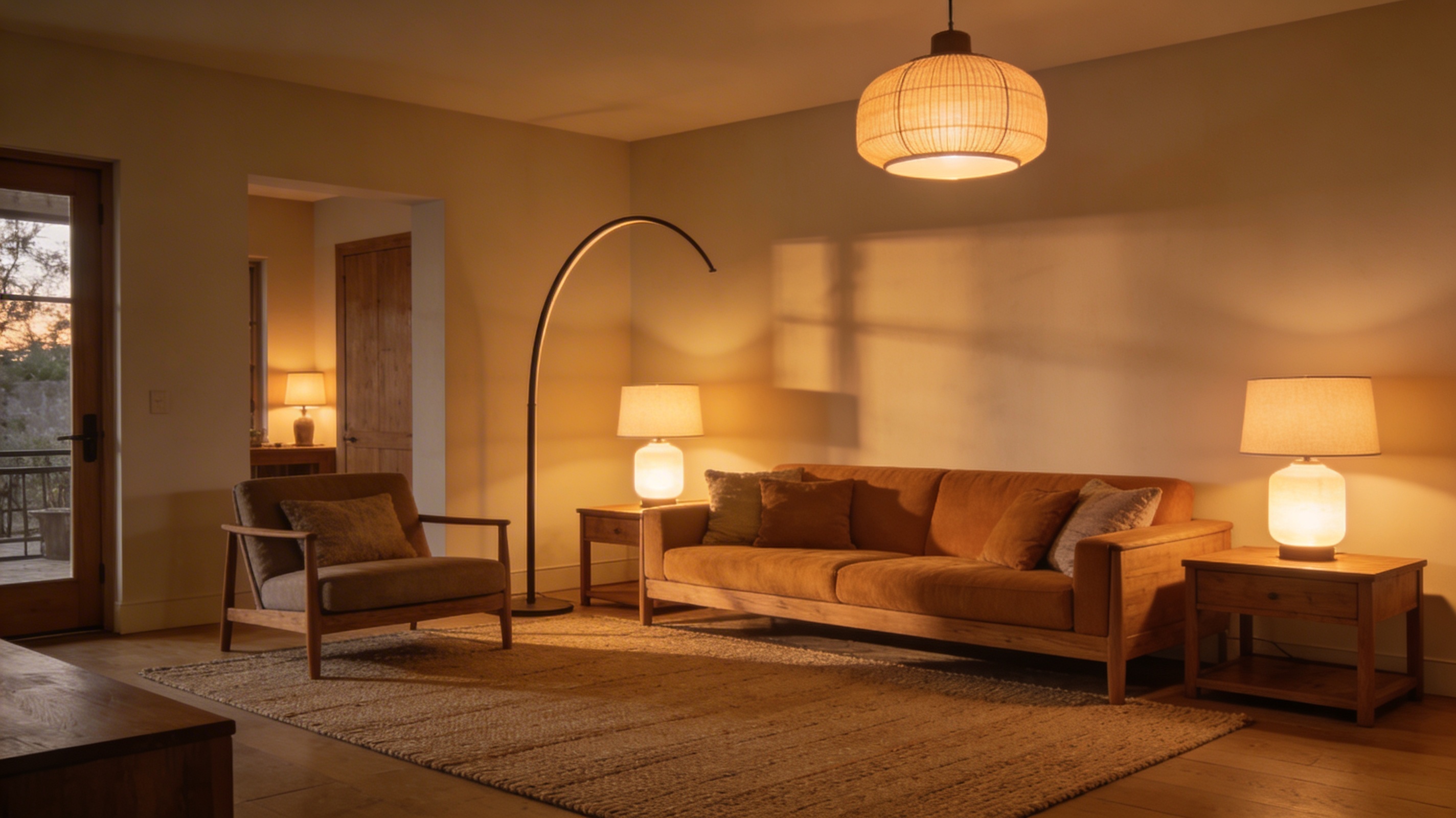
The living room needs to support multiple moods: watching TV, reading, relaxing, entertaining, and sometimes working. That is why it should never rely on a ceiling fixture alone. A dimmable overhead light creates the base, but the room becomes comfortable when you layer in table lamps and floor lamps near seating areas.
A floor lamp beside a sofa or reading chair adds task lighting, while table lamps on side tables soften shadows and make the room feel warmer at night. In most American homes, this is the room where layered lighting has the biggest visible payoff.
Bedroom lighting
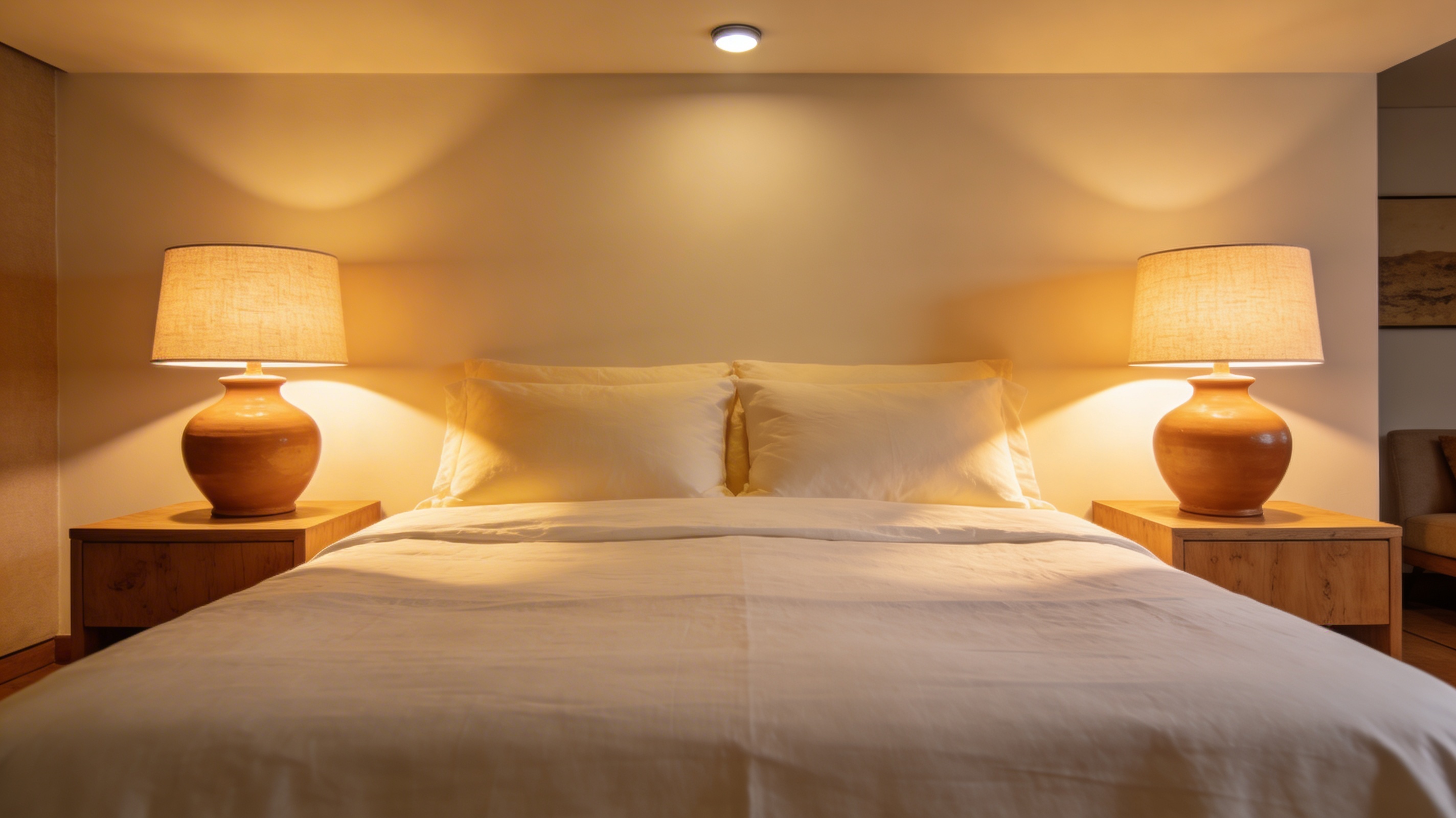
Bedrooms should feel restful, which means avoiding overly cool, overly bright overhead light. A warm dimmable ceiling light works well as ambient light, but bedside lamps are what make the room practical and cozy.
Use bedside lamps for reading and winding down at night instead of blasting the whole room with one overhead fixture. If the bedroom is large, a floor lamp in a corner can add another soft layer and make the space feel more finished.
Kitchen lighting
Kitchens need more task lighting than most rooms because prep areas, sinks, and islands all benefit from direct light. A bright but controlled ambient ceiling layer is important, but under-cabinet lighting and pendant lights over the island are what really improve usability.
If your kitchen opens into the living or dining area, lighting becomes even more important because the room needs to shift from functional to social. Keep the work surfaces bright, then use softer decorative lighting around the edges so the room does not feel clinical.
Dining room lighting
The dining room usually revolves around one main fixture, often a chandelier or pendant centered over the table. That works as the visual anchor, but the room looks more inviting when you add secondary light sources nearby, especially in open-concept homes.
A table lamp on a sideboard or console can add warmth and depth, especially during dinner when overhead light alone feels too exposed. Dimmers make the biggest difference here because dining rooms often need to shift from bright family meals to low-lit entertaining.
Add a table lamp on a console or buffet to soften the room after sunset.
Bathroom lighting
Bathrooms need a combination of clean ambient light and shadow-free task lighting around the mirror. A ceiling fixture alone often creates downward shadows under the eyes, which is exactly what you do not want for makeup, skincare, or shaving.
The best setup includes an overhead fixture plus lighting at mirror level, whether that is a vanity light or side sconces. Warm-neutral lighting tends to feel better than harsh daylight bulbs in residential bathrooms.
Home office lighting
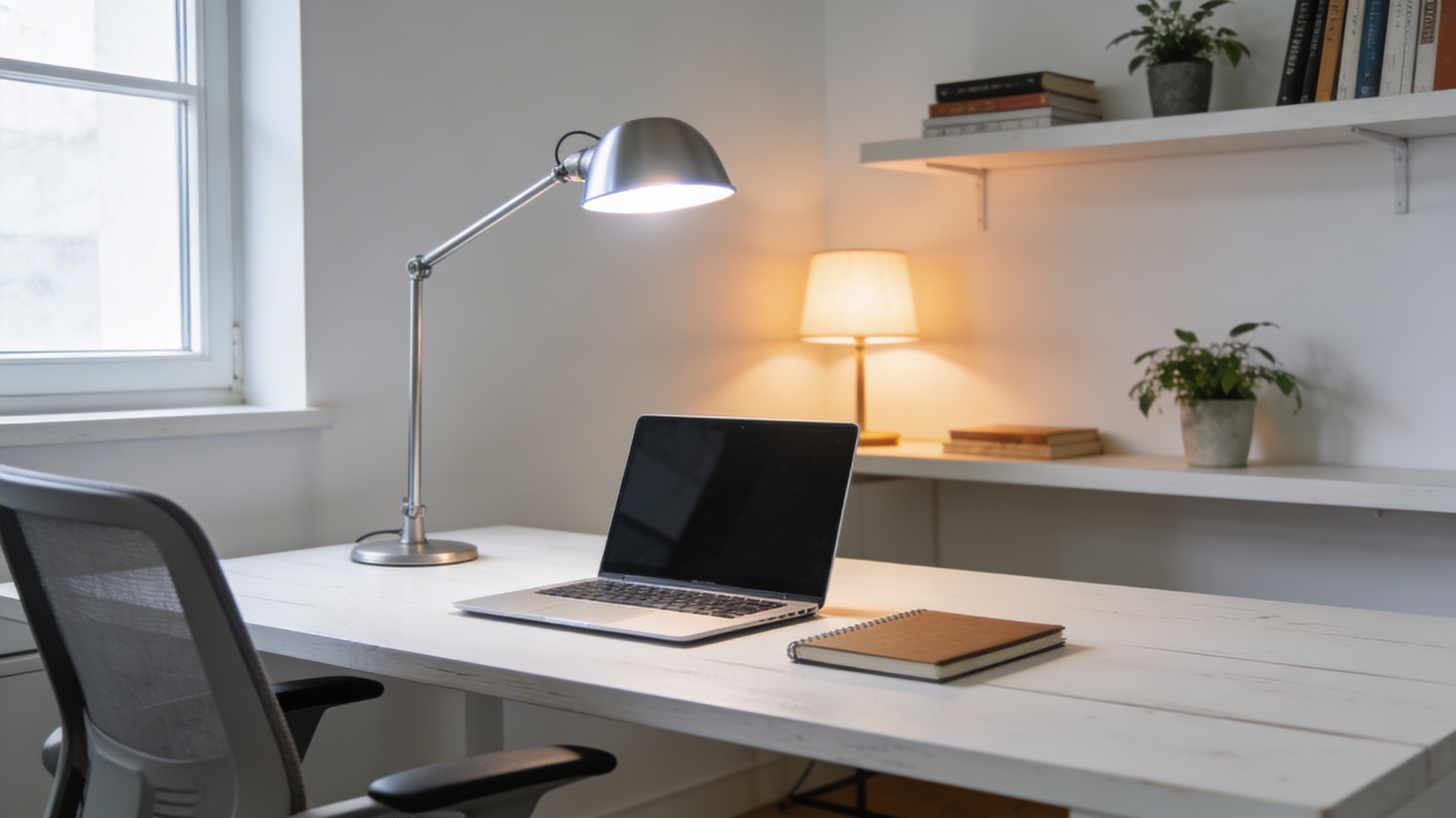
A good home office should feel bright enough to keep you alert without causing glare on screens. Use general ambient light first, then add a focused desk lamp that directly supports your workspace.
A desk lamp is one of the highest-impact lighting upgrades for productivity because it puts light exactly where you need it. If your office also doubles as a guest room or study, a table lamp or floor lamp can soften the space after work hours.
Entryway and hallway lighting
Your entryway is the first impression of your home, so it should feel welcoming rather than overly bright or neglected. A ceiling fixture provides the base, but a small table lamp on a console instantly adds warmth and makes the space feel intentionally styled.
Hallways also benefit from softer secondary lighting when possible, especially in the evening. Even one well-placed lamp can make circulation spaces feel less like pass-through zones and more like part of the home.
Style a table lamp on your entry console for an instant welcoming glow.
The best lamp type for each room
| Room | Best Lamp Type | Why It Works | Shop |
|---|---|---|---|
| Living Room | Floor lamp + table lamp | Creates soft light at different heights near seating | Floor lamps, table lamps |
| Bedroom | Bedside lamp | Ideal for reading and nighttime comfort | Bedside lamps |
| Home Office | Desk lamp | Focused light improves visibility and reduces eye strain | Desk lamps |
| Entryway | Table lamp | Adds warmth and visual polish to a console or bench area | Table lamps |
| Reading Corner | Floor lamp | Provides directed light beside a chair or sofa | Floor lamps |
The bottom line
Every room in your home works better when lighting is planned around how you actually live. The best setups combine overhead ambient lighting with lamp-based task and accent layers, so each space feels practical, comfortable, and visually balanced.
If you are not sure where to start, start with lamps. A table lamp, floor lamp, desk lamp, or bedside lamp is often the fastest and easiest way to improve a room without rewiring anything.
Frequently Asked Questions
The best living room lighting combines a dimmable ceiling fixture with floor lamps and table lamps placed near seating areas. This creates a softer, more flexible space than overhead lighting alone.
Bedside lamps are usually the best choice because they provide practical light for reading and winding down at night. In larger bedrooms, a floor lamp can add an extra soft layer.
Yes. A desk lamp provides focused light exactly where you work, which helps reduce shadows and improve comfort during reading, writing, or computer work.
Use warm white bulbs, add lamps at eye level, and avoid relying only on overhead fixtures. Layered lighting usually makes a home feel more inviting immediately.